See Our Latest Blogs- Coming Soon
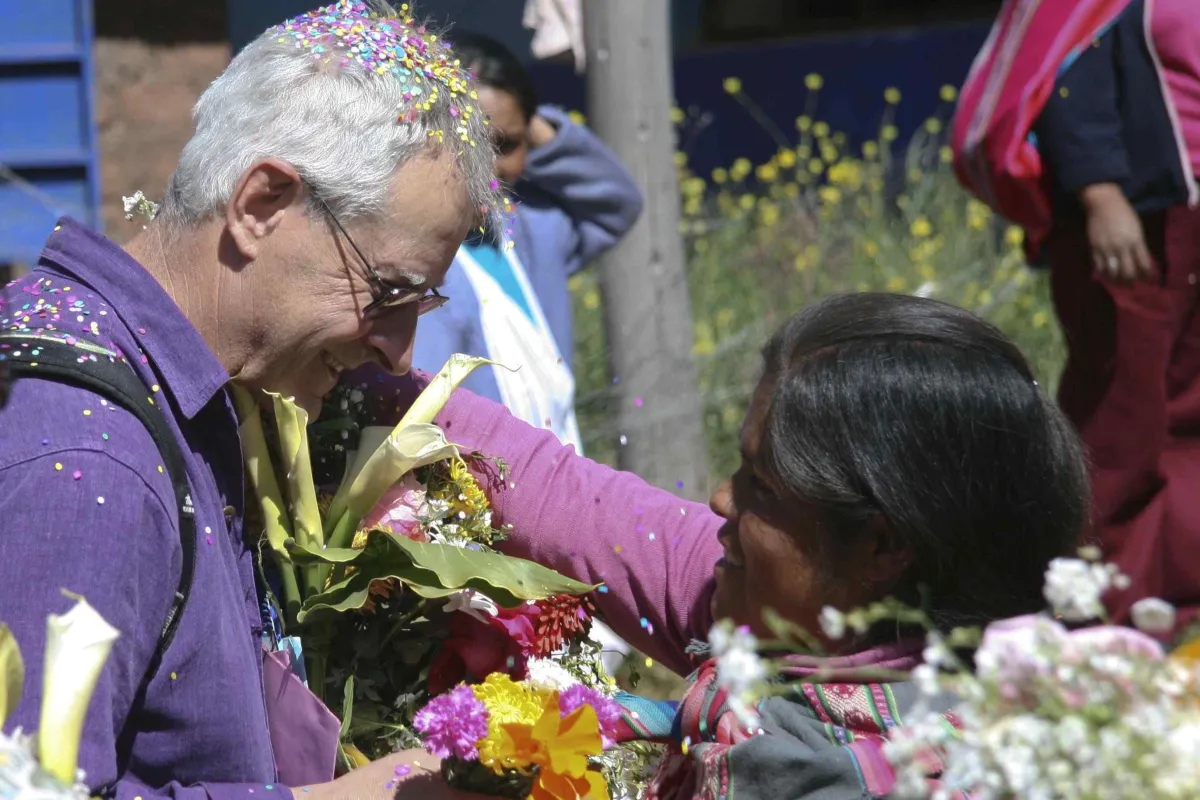
Peru: Chance Encounters and the Importance of Trust
Peru: Chance Encounters and the Importance of Trust
One of the great joys of travel is the chance encounter with that friendly local who wants to show you around or introduce you to family and friends.
But how do you know who to trust? When to say yes and when to walk away?
I struggled with this, particularly my first time in Peru. In the 1980s, Peru had two active terrorist groups and a reputation for pickpockets and violent crime, so it was wise to be a little circumspect.
Initially, I was suspicious of locals who approached me. Not being able to speak any Spanish didn’t help. Into my vacuum of understanding rushed paranoia. I imagined everyone was trying to rip me off.
It was a little girl called Maribela who breached my defences.
I was hitchhiking around in the backs of trucks and had spent a sleepless night bouncing up and down on sacks of onions. I felt and smelled foul.
I fell asleep in a park in Nazca only to wake with two crusty black feet in my face. They belonged to fourteen-year-old Maribela.
We got talking in basic Spanish. She told me both parents were dead and all she wanted in life was a basketball and a pair of shoes.
She then started asking me uncomfortable questions about how much I earned and the cost of cars and air travel. When she invited me to meet her aunties, I said no, fully expecting that I was going to be hit up for money.
A few hours later, she tracked me down in a restaurant. She invited me again.
‘Why not,’ I said. I was weary with little resistance. Besides, I had ten hours to kill before my midnight bus to Cusco.
She led me through back streets into a shanty town where a domestic argument was raging. I watched as an angry man huffed and puffed and blew down the bamboo sheeting of the house he and his partner were standing in.
Maribela introduced me to her aunties. There was a conversation, and shortly afterwards, Maribela returned with BBQ chicken and Coke.
We sat in their bedroom and enjoyed the feast, a rare treat for them I imagined. We didn’t talk much. The aunties spat the bones onto the dirt floor for their dog to clean up.
It might have ended there, except there was a dance in the township that night. One of the aunties invited me to join them and I spent the next few hours scuffing up clouds of dust in a sepia light dancing to huaynos, salsa and Peruvian pop music from a local DJ.
I kept waiting for the hit. When were they going to ask me for money? It never came and just before midnight I thanked them headed to the bus station.
I couldn’t quite believe their kindness and generosity.
This encounter has stayed with me and informed my philosophy to travel. If I have a chance encounter my default position is that the person is a kind and generous human being.Unless the person is pissed, stoned, carrying a gun or oozing seriously bad vibes I open my heart, trust and say yes.
It is a philosophy that has served me well across five continents and more than forty years of travel.
Trust is the only way.
I lead small-group journeys to Peru for people ready to travel differently. If this resonates, feel free to reach out at [email protected]
How a barefoot fourteen-year-old taught me the most important rule of travel
On trust, chance encounters, and the philosophy that has guided forty years of travel across five continents.
I was sleeping in a park in Nazca, exhausted. I'd spent the night in the back of a truck, bouncing up and down on sacks of onions. I smelt terrible. I was sore. I hadn't slept. I'd been in Peru long enough to be suspicious of everyone while understanding nothing.
I woke up to two crusty black feet in my face.
They belonged to fourteen year old Maribela. Both parents were dead and she lived with her aunties. She told me all she wanted in life was a basketball and a pair of shoes. Then she asked me uncomfortable questions about what I earned and the cost of cars and plane tickets. When she invited me to meet her aunties I said no.
I was certain I was about to be hit up for money.
A few hours later she found me again at a restaurant. Same invitation.
"Why not," I said. I was weary my resistance was down, and I had ten hours before my midnight bus to Cusco.
"I kept waiting for the hit. When were they going to ask me for money? It never came."
She led me through back streets into a shanty town. Her aunties appeared. There was a conversation in rapid Spanish I couldn't follow, and then Maribela came back with BBQ chicken and Coke. We sat in a small bedroom and ate together, the aunties spitting bones onto the dirt floor for the dog. Later that night, one of the aunties invited me to a dance in the township. I spent the next few hours in a cloud of dust, dancing to huaynos, salsa and Peruvian pop music under a sepia light.
No one asked me for a single sol.
I've thought about that night more times than I can count. It was 1980s Peru — two active terrorist groups, a reputation for violent crime, and I was a solo traveller who spoke barely any Spanish. Every rational signal said keep your guard up. Yet when I dropped my guard I was rewarded with unexpected kindness and generosity.
Since then, I've travelled across five continents over forty years. And the philosophy I formed that night in Nazca has held up in every one of them: if I have a chance encounter, my default position is that the person in front of me is a kind and generous human being. Unless they're carrying a weapon, drunk or giving off seriously bad vibes, I open my heart, trust, and say yes.
It's a philosophy that has given me the best experiences of my travelling life. The meals no restaurant could replicate. The homes I never would have entered. The conversations that changed how I see things.
Fear is a useful instinct. But in travel, as in much of life, it is badly calibrated. We over-index on threat and under-index on the overwhelming human tendency toward kindness.
Trust is the only way.
I lead small-group journeys to Peru for people who want to travel this way — open, present, and genuinely curious about the people they meet. If this resonates, reach out at [email protected]
Peru, a barefoot girl, and the philosophy I've lived by for forty years
The chance encounters that reshape you rarely announce themselves in advance.
It was the 1980s. Peru had two active terrorist groups and a well-earned reputation for pickpockets and violent crime. I was hitchhiking around in the backs of trucks, sleeping where I could, spending nights I hadn't planned for in places I hadn't expected.
I didn't speak any Spanish. Not even the basics, really. Into that vacuum of understanding rushed something I hadn't anticipated: pure paranoia. I became convinced that every local who approached me was running an angle. Every smile had an ulterior motive. Every friendly overture was the first move in a scheme I hadn't yet identified.
I'm not proud of it. But I think it's honest to admit that fear, in an unfamiliar country, is not always rational.
One night I hitchhiked in the back of a truck, bouncing up and down on sacks of onions, unable to sleep. By the time I reached Nazca I was tired, sore and smelly. I found a park, lay down on the grass and fell asleep.
I woke up to two crusty black feet in my face.
"She asked me uncomfortable questions about what I earned, and the cost of cars, and what it felt like to step onto an aeroplane. The gap between our lives was enormous and she was looking straight at it."
They belonged to Maribela. She was fourteen.I had just enough Spanish to have a basic conversation. Both parents were dead and she lived with her aunties. All she wanted in life was a basketball and a pair of shoes.
She started asking uncomfortable questions. How much did I earn? What did a car cost? How much was the flight? What was it like to step onto an aeroplane?
When she invited me to meet her aunties, I said no. I had constructed an entire narrative: this was the setup, the warm act before the ask. I would be steered into a room, made to feel obligated, and then the hand would come out.
A few hours later she found me at a restaurant. Same invitation, same steady eyes.
"Why not," I said. I was too weary to resist and I had ten hours to kill before my midnight bus to Cusco.
She led me through back streets, into a part of town I would never have entered alone, into a neighbourhood of bamboo-walled houses where a domestic argument was in full, theatrical swing — an angry man huffing and puffing until he literally knocked down the bamboo sheeting of the house he and his partner were standing in. We stepped around them. Maribela didn't break stride.
Her aunties appeared. There was a rapid conversation in Spanish I couldn't follow. Then Maribela came back with BBQ chicken and Coke. We sat in a small bedroom — me, the aunties, Maribela — and we ate. The aunties spat the bones onto the dirt floor for the dog to clean up.
Later that night, one of the aunties invited me to a dance in the township. I spent the next few hours in a sepia half-light, kicking up clouds of dust, dancing to huaynos and salsa and Peruvian pop music from a local DJ. The auntie tried unsuccessfully to teach me the salsa.
"I kept waiting for the hit — the moment they asked me for money. It never came. Just before midnight, I thanked them and walked to the bus station alone."
The whole experience was wonderful. These women with very little, had fed me, danced with me, and sent me on my way without asking for anything.
That night in Nazca became the foundation of something I've tried to carry ever since.
When a stranger approaches me in an unfamiliar place, my default position is that the person in front of me is a kind and generous human being. Not naively so. I pay attention. Unless someone is drunk, carrying a weapon, or giving off seriously bad vibes I open my heart, trust, and say yes.
In forty years of travel across five continents, this philosophy has given me the best experiences of my life. Meals in homes I would never have found. Conversations that shifted how I understood things. Moments that no itinerary could have planned for, because they arose entirely from the willingness of one person to trust another.
Fear is useful. It kept our ancestors alive. But it is badly calibrated for modern travel, particularly when the threat it imagines is simply a person who is different from us, in a place we don't yet understand.
Maribela didn't wait for me to be ready. She just showed up with chicken and Coke and a dance floor.
Trust is the only way.
I lead small-group journeys to Peru for people who want to travel this way — open, present, and genuinely curious about the people they meet. If this resonates, reach out at [email protected]
At the time I was living with a Cusceñan family and knew Peruvians to be kind generous people, once you cross over the boundary from being an outside to an insider. . This encounter reinforced it.
like the man in Kolkata who wanted to take me upstairs to his room and show me some yoga poses. I was probably wise to decline.
But I said yes to the Peruvian who took me to a restaurant to taste ceviche and then took me on a bus to the outskirts of Lima to meet his family. I said yes to the Kenyans posing as refugees —I didn’t knoew tht at the time
But how do you know when you meet a local person who wants to show you around or introduce you to friends and family whether they are being sincere or whether something more sinister is at play. How open are you to the chance encounter when you travel? How accurate is your bullshit detector when you meet someone? How do you know whether someone is sincere or there’s something more sinister at play?
It’s not easy finding that balance between It’s trickyPeru has much to recommend it as a destination for the tourist: Machu Picchu, Cusco and the Sacred Valley, The Nazca Lines, the Amazon Jungle, the pre-Inca archaeological sites in the north, the condors at Colca Canyon, Lake Titicaca.
Yes, these things are amazing but it is the chance encounters and relationships I’ve formed over forty years that endure most in my memory and keep me going back.
I think about the chance encounter with a young girl named Maribela in a park in Nazca. I’d spent a sleepless night travelling on bags of onions in the back of a truck. I’d fallen asleep only to wake with two crusty black feet in my face. Maribela’s feet as it turned out.
They were pitch black because she didn’t own a pair of shoes. That was her dream she told me: a basketball and a pair of shoes.
She invited me to meet her auntiesi f shoes. pBut the tourist stuff is not the stuff I treasure most. What endures most are the chance encounters and the relationships I’ve formed over forty years.
se are not the things I treasure .notherfor sightThe most enduring memories I have from my experiences living working and travelling overseas are the chance encounters and the long term relationships I’ve formed.
I remember thr chance encounter with a fourteen year old girl named Maribela the night’ve never been particularly interested in tours. Which sounds contradictory for someone who runs them.
You know the kind.
Big groups. Tight schedules. A checklist of places you’re supposed to see so you can say you’ve “done” a country.
There’s nothing wrong with that.
It’s just not how I’ve experienced Peru.
Peru, for me, has always been about relationship.
With people.
With place.
With something harder to name.
When I first arrived, I didn’t move through Peru—I lived in it.
I sat at kitchen tables where Spanish and Quechua flowed around me faster than I could understand. I shared meals that stretched long past hunger. I learned that connection doesn’t come from efficiency.
It comes from presence.
So when we designed this journey, the question wasn’t:
What should people see?
It was:
How do we help people feel what Peru actually is?
That changes everything.
It means smaller groups.
It means staying in places with character, not just convenience.
It means allowing time for conversations that aren’t scheduled.
It means working with local people not as “experiences,” but as partners in something shared.
There’s a moment in the Sacred Valley where we spend time with a local community.
No performance. No staged interaction.
Just people meeting people.
At first, there’s a bit of hesitation—on both sides.
And then something softens.
A smile. A shared joke. Someone tries a few words in Spanish. Someone else responds in Quechua. Laughter fills the gaps where language falls short.
And suddenly, it’s not “them” and “us.”
It’s just… people.
That’s when Peru starts to open.
Not through landmarks.
But through connection.
Travel, at its best, doesn’t just show you the world.
It rearranges you.
It loosens the fixed ideas you didn’t realise you were holding.
It reminds you that there are many ways to live a life—and none of them are the default.
This journey isn’t about escaping your life.
It’s about seeing it more clearly.
And sometimes, you need to step into a completely different world…
to recognise what matters in your own.
What others are saying
Education. Inspiration. Transformation.
Empowering you to flourish in the second half of life with the tools, experiences, and support to create lasting change.
© 2026 Possibility of Us - All Rights Reserved